
Videomaster Star Chess
The Videomaster Star Chess looked like the ultimate blend of chess and space combat. After weeks of saving, I finally bought one, only to discover that the futuristic battles promised in the adverts were much slower and less exciting than I had imagined.

Out in town one day, I popped into the local newsagents next to the bus station while on my way home from work. I would often buy technology and science-fiction magazines, and on one visit I found a magazine called Video World. It was packed full of articles about the latest gadgets, computers, video games and home electronics. I loved it and soon started collecting every issue each month.
In the back pages were adverts for all sorts of technology and electronic gadgets. One thing that particularly caught my eye was the growing number of electronic chess computers. I thought one of these might be a good way to pass the time on long journeys, but they were far beyond what I could afford.
One advert, however, stood out from all the others. It wasn't just another electronic chess set. It was something called the Videomaster Star Chess. It combined chess with science-fiction space combat and looked absolutely amazing. The advert showed futuristic star ships battling across a chessboard and promised features such as missiles, shields and warp jumps. Unfortunately, it also carried a price tag of around £60, which was far more money than I could justify spending.
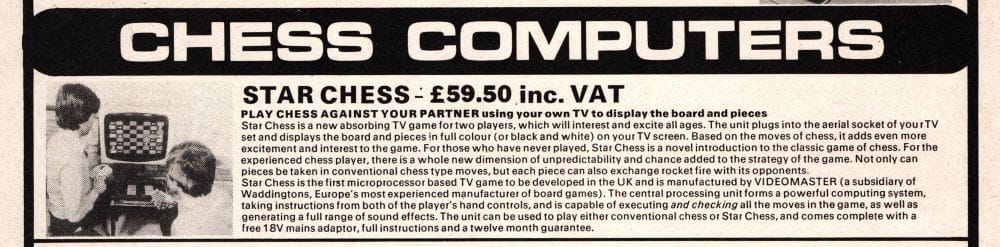
In my local town there was an electrical retailer called Rumbelows. They sold televisions, radios, hi-fi systems and all sorts of electronic equipment. I would regularly walk past the shop on my way to and from work.
One day, while passing the shop, I suddenly stopped in my tracks. There in the window was the very same Star Chess console from the magazine advert. Seeing it in real life made it look even better than it had on paper. I went into the shop to ask about it and discovered the price really was £60.
That was a lot of money in the late 1970s, but I wanted it badly.
From then on, every time I walked past Rumbelows I would stop and look at it. I imagined commanding fleets of spaceships, firing missiles and blasting enemy vessels across the screen. Eventually I decided I was going to have one and started saving my wages.
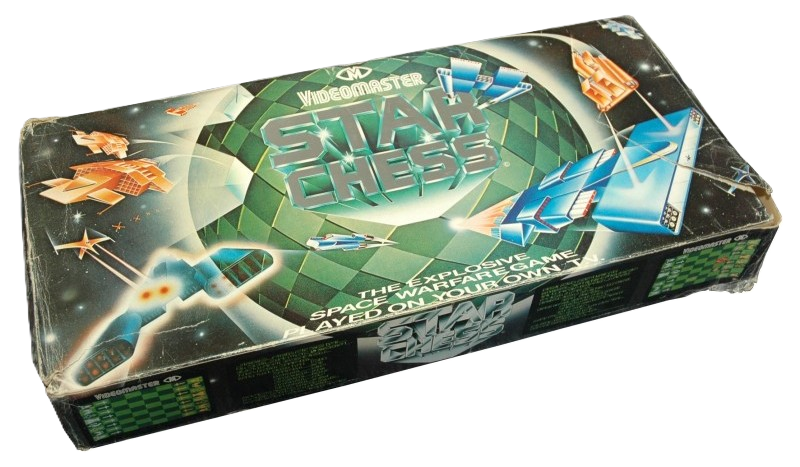
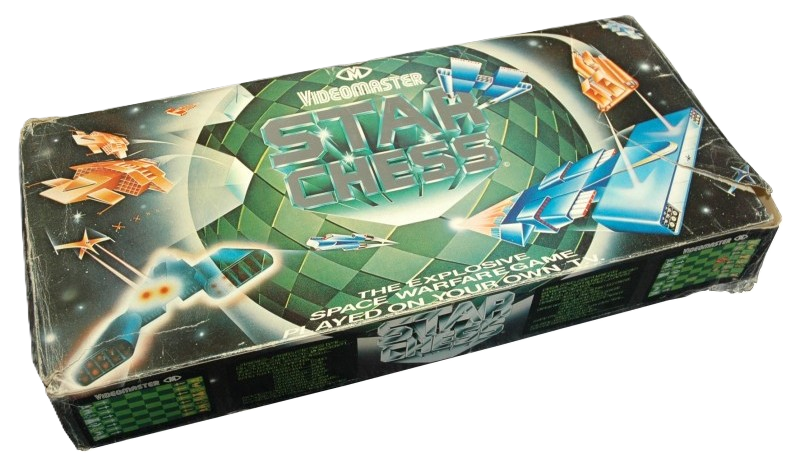
After several weeks of saving, I finally had enough money. I went into the shop and bought it.
I was incredibly excited carrying it home.
As soon as I got in the house, I opened the box. The presentation was impressive. Everything was neatly packed and the device itself looked modern and well designed. Even the instruction manual looked professionally produced and gave the impression that this was a serious piece of futuristic technology.
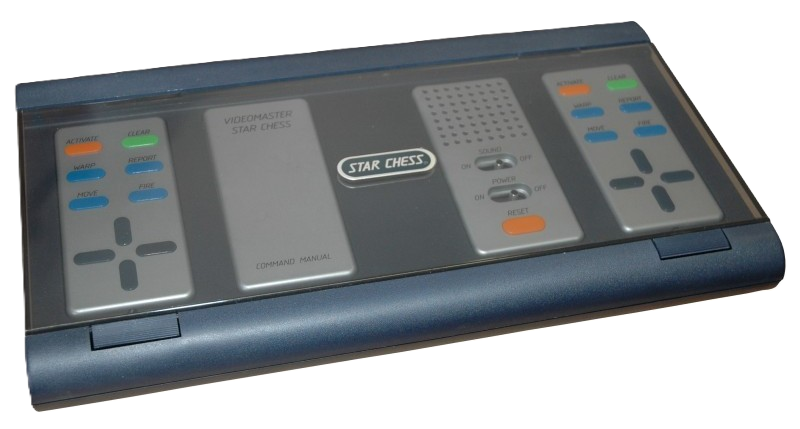
The layout was particularly impressive. Under a clear plastic cover sat the entire system. On the far left and right were two tethered controllers, one for each player. Each controller had buttons marked Activate, Clear, Warp, Report, Move and Fire, along with four-way directional controls.
In the centre-left was a removable command reference manual protected by clear plastic covers, while on the centre-right sat the main control unit with its speaker, power switch, sound controls and reset button.
It all looked very futuristic and well thought out.
Star Chess could be played as a normal game of chess, but its real attraction was the science-fiction game mode. Players moved their starships according to chess rules but could also fire missiles at opposing pieces, activate shields, request damage reports and even perform random warp jumps around the board.
On paper it sounded fantastic.
The reality was rather different.
When I connected it to the family television and switched it on, it initially looked impressive enough. The problem came once the game started. Everything felt incredibly slow and static. The spaceships didn't fly around the screen as I had imagined. Instead they simply disappeared from one square and slowly reappeared on another.
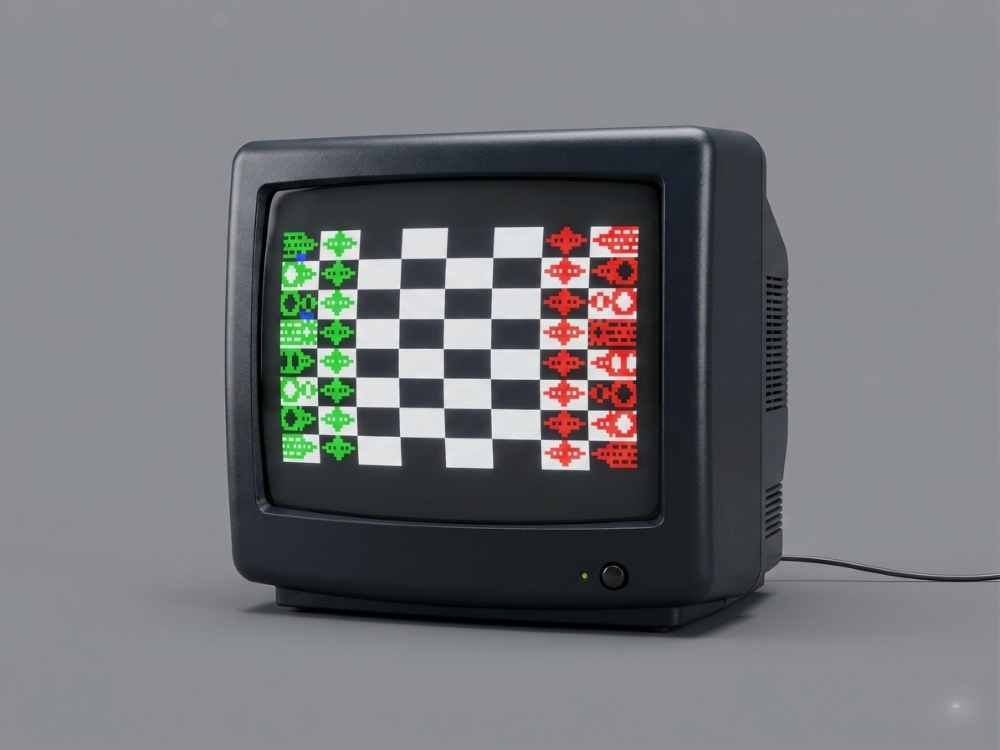
Missiles were equally disappointing. Rather than dramatic laser battles, a small dot would slowly move from one square to the next. Even playing ordinary chess without using the science-fiction features felt sluggish and unexciting.
The biggest problem was that Star Chess was strictly a two-player game. If there was nobody available to play against, there wasn't much point turning it on. Unlike later chess computers, there was no computer opponent to challenge.
The magazine adverts had filled my head with visions of space battles, but what I actually got was a very slow electronic board game.
Unfortunately, the novelty wore off very quickly.
Star Chess soon ended up gathering dust. I honestly can't remember what eventually happened to it. It was probably sold, given away or simply disappeared during one of the many house moves over the years.
Looking back, it remains one of the few pieces of technology I bought that completely failed to live up to my expectations. It looked fantastic, was beautifully presented and had some genuinely clever ideas, but the technology of the time simply wasn't capable of delivering the exciting experience the advertising promised.
Had I kept it, though, it would almost certainly be in pristine condition today, because I doubt it received more than a few hours of actual use.
Looking back, the Videomaster Star Chess was actually quite an impressive piece of technology for 1979, even if it failed to live up to my expectations.
Unlike most home video game consoles of the era, Star Chess was a dedicated electronic board game that used the television as a display. It was designed specifically to play a futuristic version of chess where players commanded fleets of starships instead of traditional chess pieces.
Internally, the machine was powered by a Motorola MC6808-family microprocessor with just 256 bytes of RAM and 256 bytes of ROM. By modern standards that is an incredibly small amount of memory, which helps explain why the gameplay felt slow and why the graphics were so simple.
The system connected to a television through the aerial socket and displayed a colourful game board with spaceship pieces, missile attacks, shields and warp jumps. Sound effects were provided through a built-in speaker, while two wired controllers allowed players to enter commands such as Move, Fire, Warp and Report.
One aspect that even modern collectors still admire is the design. The smoked transparent cover, concealed controllers and integrated command reference guide gave Star Chess a futuristic appearance that looked far more advanced than many other electronic games available at the time.
In hindsight, the concept was actually quite ambitious. Combining chess with science-fiction combat, shields, missiles and warp travel was an interesting idea, but the technology available in 1979 could not fully deliver the exciting space battles suggested by the advertising. Perhaps that explains why my memories of Star Chess are split between the excitement of wanting it and the disappointment of actually owning it.