
Decades
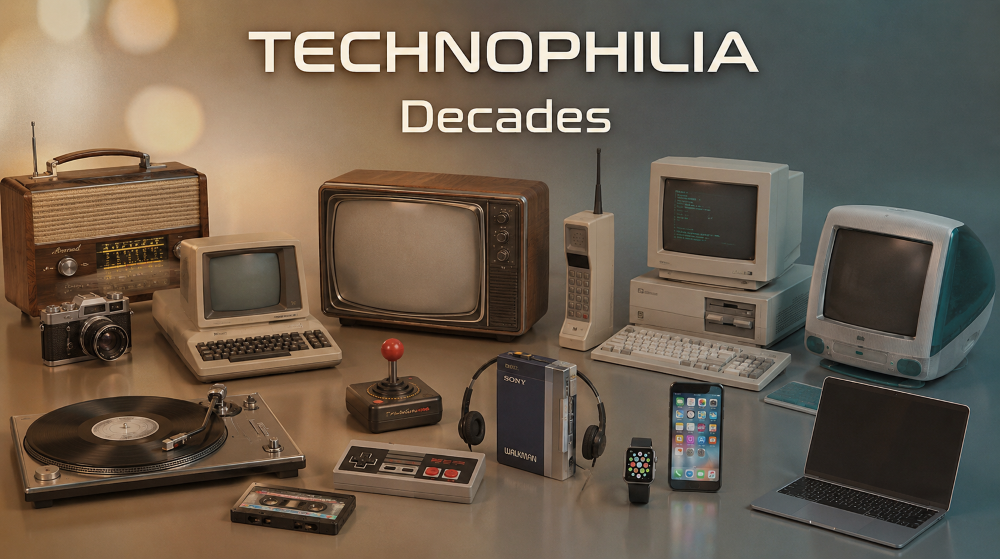
Technology has changed beyond recognition during my lifetime. From black and white televisions and film cameras to home computers, the internet and 3D printing, every decade brought something new to discover. This page acts as a timeline through Technophilia, allowing you to explore the technology that shaped each era and my personal experiences with it.
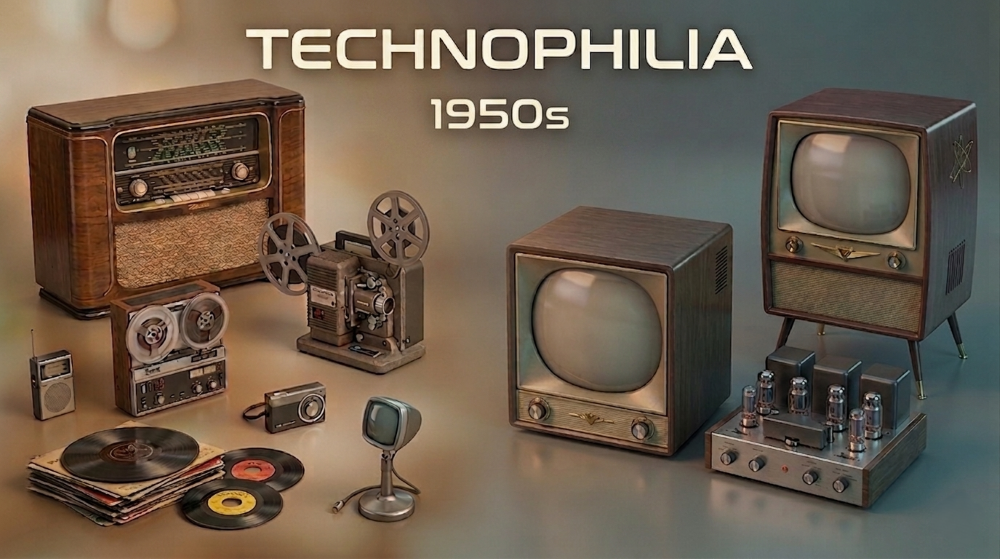
The 1950s – The Foundations of the Modern World
Although I wasn't born until the end of the 1950s, it was a decade that quietly laid the foundations for almost every piece of technology I would later grow up with. The computers, televisions, cameras and audio equipment that fascinated me throughout my childhood and beyond all owe something to the remarkable advances made during this period.
In many ways, the 1950s marked the beginning of the modern electronic age. Television ownership expanded rapidly, bringing entertainment and news into millions of homes for the first time. Radio was still hugely popular, while advances in hi-fi equipment and vinyl records transformed the way people listened to music. Photography also became more accessible, with affordable cameras allowing families to capture everyday life in a way that had previously been reserved for special occasions.
Behind the scenes, computing was beginning its own revolution. The room-sized machines developed during this decade seem primitive by today's standards, but they introduced ideas and technologies that would eventually lead to the home computers of the late 1970s and early 1980s. Transistors started replacing bulky vacuum tubes, making electronic devices smaller, more reliable and far more practical. Without those developments, machines such as the Sinclair ZX80, ZX81, Commodore VIC-20 and Amstrad CPC would never have become a reality.
For me, the 1950s represent the starting point of the technological journey that this website explores. While many of the devices featured from this decade are ones I've researched rather than personally owned, understanding where modern technology began makes the later decades even more fascinating. Every invention built upon the work of those that came before, creating the world of personal computing, digital photography, gaming and consumer electronics that I was fortunate enough to experience first-hand.
The articles collected here explore the innovations, products and stories from the 1950s that helped shape the technology we often take for granted today. They are the beginning of a timeline that eventually leads through my own childhood, my first computers, cameras, games consoles and many other technological adventures documented throughout Technophilia.
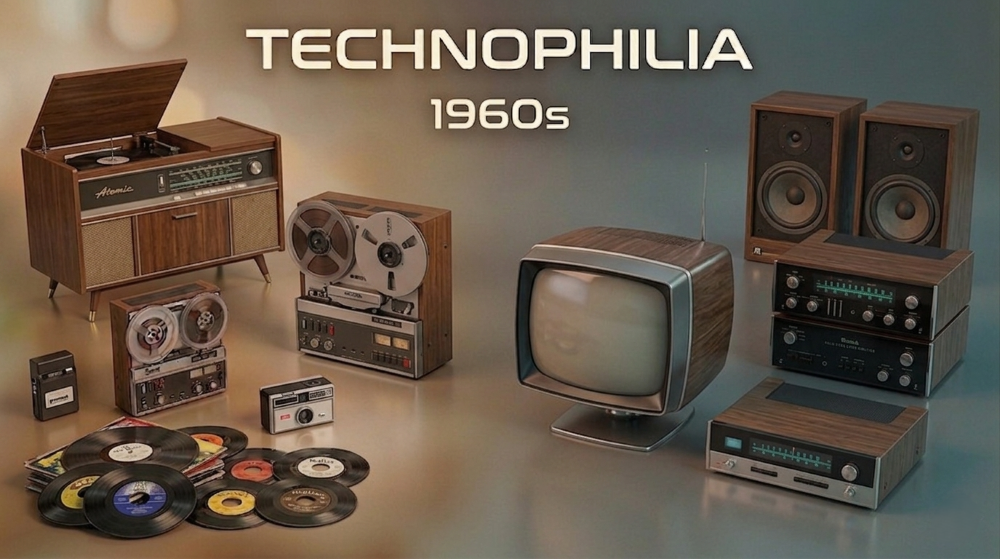
The 1960s – Where My Story Begins
The 1960s were the beginning of my own journey through the ever-changing world of technology. Born in 1960, I arrived at a time when Britain was rapidly embracing modern consumer electronics. Television ownership had become commonplace, radio was still at the heart of family entertainment, and colour television was beginning to make its first appearances. Although I was too young to appreciate the technology itself, these were the devices that formed the backdrop to my earliest memories.
Some of my first experiences with technology came through simple household items that many people now take for granted. Black and white television introduced me to programmes such as Doctor Who, Thunderbirds and Tomorrow's World, while our Rediffusion cable television system offered a glimpse into a future where viewers had more choice than ever before. Looking back, it seems remarkably primitive compared with today's streaming services, but at the time it felt thoroughly modern and exciting.
Photography also began to play a part in my life during this decade. Family photographs captured birthdays, holidays and special occasions long before anyone could instantly review a picture on a screen. Every photograph mattered because film was precious, and waiting days or even weeks to see the developed prints was simply part of the experience. Those early memories would eventually grow into a lifelong interest in photography and preserving old images.
The 1960s also saw enormous technological progress around the world. Space exploration captured imaginations, culminating in the Apollo Moon landings, while advances in electronics continued to make devices smaller, cheaper and more reliable. Transistors were replacing valves, integrated circuits were beginning to appear, and computers were slowly moving from specialist scientific machines towards something that would one day become part of everyday life.
Although I didn't own a computer or games console during the 1960s, this decade created the foundations for everything that followed. It was the era that sparked my fascination with technology, whether through television, cameras, audio equipment or simply wondering how these amazing machines worked. Many of the memories collected in this section may seem modest by modern standards, but they represent the very first steps in a lifelong passion that eventually led to home computers, digital photography, 3D printing and countless other technologies explored throughout Technophilia.
The articles in this section look back at the technology that surrounded my childhood during the 1960s. Some are deeply personal memories, others explore the remarkable innovations of the era, but together they tell the story of how an ordinary childhood growing up in Britain became the starting point for a lifelong fascination with technology.
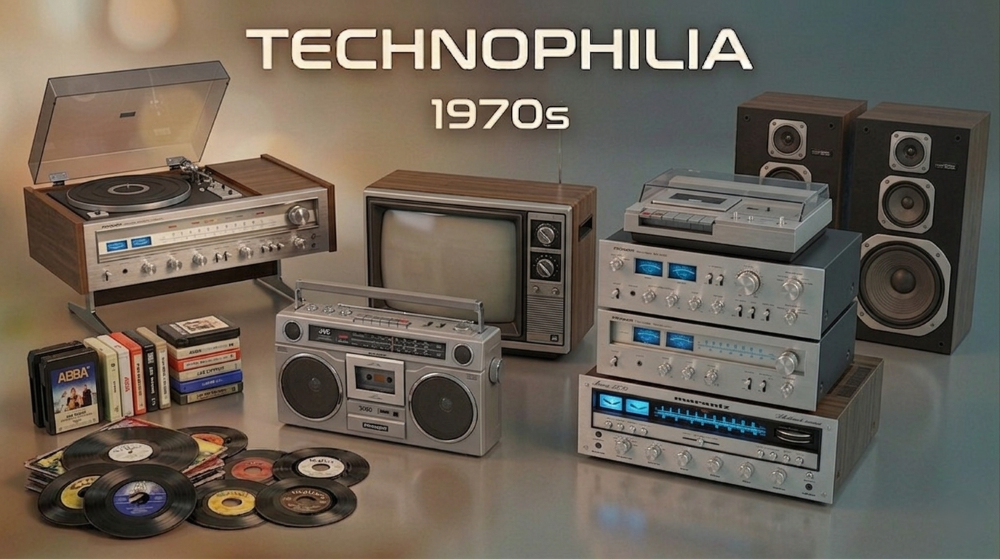
The 1970s – Discovering a Passion for Technology
The 1970s were the decade when my fascination with technology truly came to life. No longer just watching the latest gadgets from a distance, I was beginning to own and use them for myself. Looking back, it was an incredible time to grow up. Technology was advancing at a remarkable pace, and almost every year seemed to bring something new that captured my imagination. What began with simple electronic devices soon grew into a lifelong passion that continues to this day.
Television remained at the centre of family life, but it was no longer the only source of entertainment. Cassette tape recorders became affordable, allowing me to record music from the radio, experiment with sound effects and even create my own recordings. Photography also became a much bigger part of my life as I progressed from simple cameras to more capable models, capturing family events, holidays and everyday moments that I still treasure today. Long before digital cameras and smartphones, every photograph required thought because each frame of film counted.
This was also the decade that introduced me to electronic games. Before home computers became widely available, dedicated games consoles brought arcade-style entertainment into the living room. Although the graphics were incredibly simple by today's standards, they opened the door to a completely new form of entertainment. It wasn't just about playing games; it was about experiencing a technology that seemed almost magical at the time.
Perhaps the biggest turning point came towards the end of the decade with the arrival of affordable home computers. Reading computer magazines and seeing advertisements for machines such as the Sinclair ZX80 sparked an excitement that is difficult to describe today. The idea that an ordinary person could own a computer at home seemed almost unbelievable. Unlike modern computers that are primarily used to consume content, these early machines encouraged you to learn, experiment and create. They inspired curiosity, patience and problem-solving, qualities that would stay with me throughout my life.
The wider world of technology was changing just as quickly. Colour television was becoming the norm, electronic calculators were replacing slide rules, digital watches appeared on people's wrists, and the first home video recorders began arriving in living rooms. Space exploration, advances in consumer electronics and the rapid development of microprocessors all pointed towards an exciting future that felt closer with every passing year.
For me, the 1970s were the decade that transformed technology from something I simply used into something I genuinely loved. It was the beginning of my personal computing journey and the start of an enthusiasm that would eventually lead to building computers, restoring old photographs, experimenting with home brewing technology, exploring 3D printing and documenting decades of technological memories here on Technophilia. Many of the articles in this section revisit those formative years and the devices that sparked a fascination which has lasted for more than half a century.
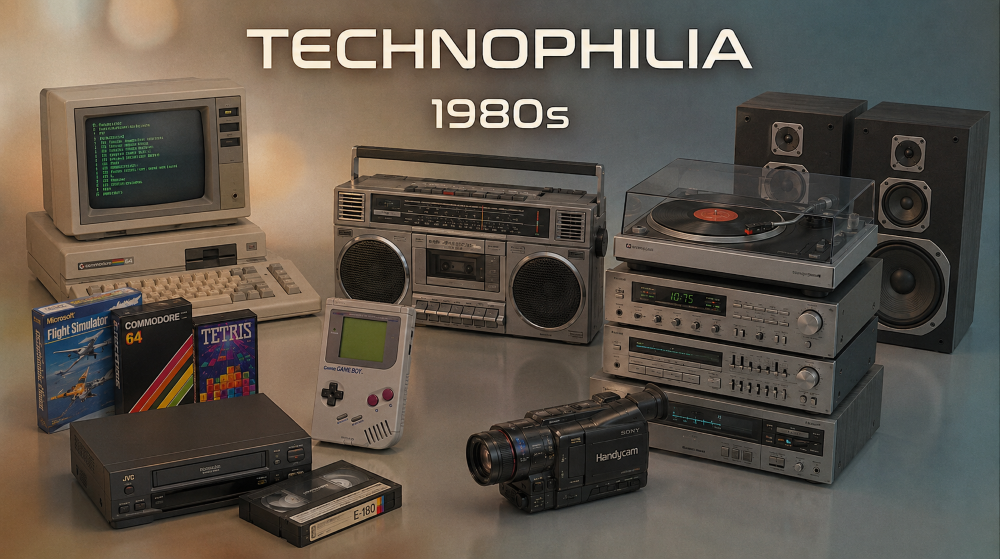
The 1980s – The Home Computer Revolution
If the 1970s sparked my interest in technology, the 1980s turned that interest into a lifelong passion. This was the decade when home computers became affordable enough for ordinary families, and I found myself completely absorbed by the rapidly changing world of personal computing. It seemed as though every few months there was another exciting machine being launched, each one promising more memory, better graphics and greater possibilities. It was an extraordinary time to be discovering technology.
My own journey through the decade followed the evolution of home computing itself. From the Sinclair ZX80 and ZX81, through the Commodore VIC-20 and later the Amstrad CPC range, each computer taught me something new. Programming in BASIC, loading games from cassette tapes, expanding memory and experimenting with peripherals became part of everyday life. These early computers demanded patience and curiosity, rewarding those willing to learn how they worked rather than simply expecting everything to happen automatically.
Gaming also evolved dramatically throughout the decade. Arcades were thriving, home consoles became more sophisticated and computer games grew from simple block graphics into colourful adventures, simulations and strategy games. Spending several minutes waiting for a cassette to load may seem unimaginable today, but at the time it was simply part of the experience. Every successful load felt like a small victory, making the games themselves all the more rewarding.
Technology outside the computer world was advancing just as quickly. VHS video recorders transformed home entertainment, allowing television programmes to be recorded and watched at a more convenient time. Audio cassette recorders became more portable, personal stereos changed the way people listened to music, and cameras continued to improve, encouraging me to document family events, holidays and everyday life. Consumer electronics were becoming increasingly digital, and it was exciting to watch that transformation unfold.
Towards the end of the decade, personal computers were becoming more powerful and capable than anyone could have imagined just a few years earlier. Hard drives, graphical operating systems and faster processors hinted at a future where computers would become an essential part of everyday life rather than an enthusiast's hobby. Looking back, it is remarkable how many of today's technologies can trace their roots back to the innovations of the 1980s.
For me, the 1980s were far more than just another decade of technological progress. They were the years in which I developed the skills and enthusiasm that would stay with me for life. The experiences of learning to program, solving computer problems, upgrading hardware and experimenting with new technology created a foundation that eventually led to building my own PCs, embracing digital photography, exploring home networking and, many years later, discovering the world of 3D printing. The articles collected here revisit those memorable years and celebrate one of the most exciting periods in the history of consumer technology.