
Sinclair ZX80
A magazine advert for the Sinclair ZX80 promised a real home computer for under £100. After weeks of waiting, it arrived and introduced me to BASIC programming, cassette storage and the frustration of debugging endless typing mistakes.

In the summer of 1979, while waiting for my bus home, I popped into my local newsagents to pick up the latest issue of Video World magazine. while giving a quick scan on the bus home I was hoping to find some interesting new gadget or piece of technology to read about.
One advert immediately caught my attention. It was for a computer called the Sinclair ZX80.
At first, I could hardly believe what I was reading. Here was a complete home computer for just £99.95, a fraction of the price of many other computers available at the time. Until then, computers had always seemed like expensive machines found in businesses, schools or science-fiction films. The idea that I could actually own one myself seemed almost unbelievable.
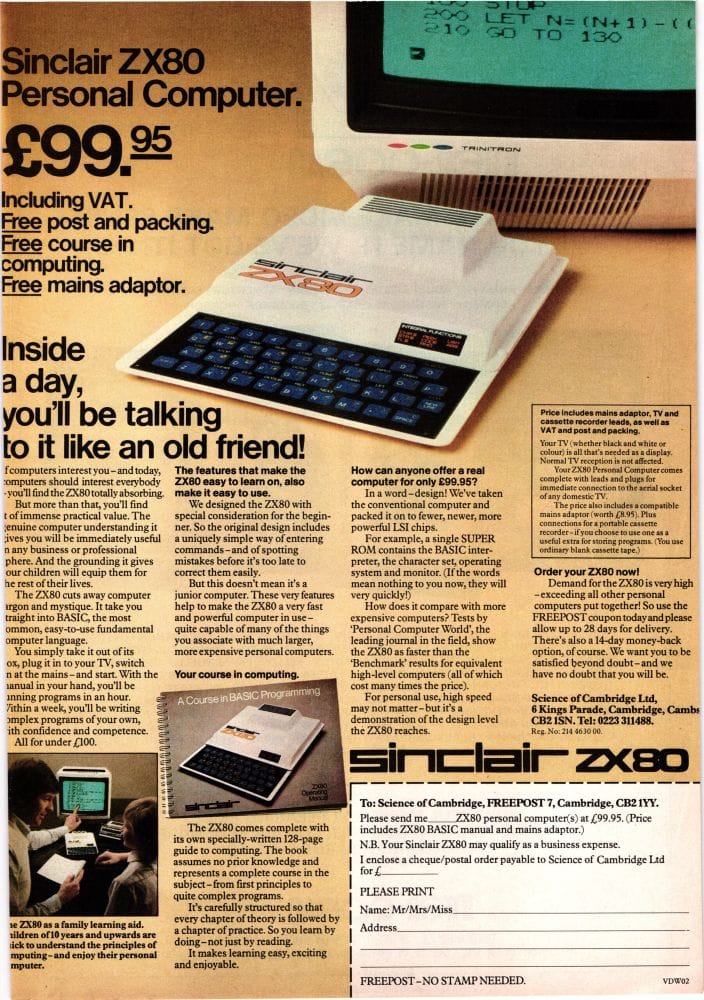
The advert proudly described the ZX80 as "the world's first complete personal computer for under £100". Whether that claim was entirely accurate or not, it certainly achieved its purpose. I was hooked.
Released in 1980 by the British company Sinclair Research, the ZX80 was designed by Sir Clive Sinclair to bring computing into ordinary homes at an affordable price.
Despite its low cost, it was a genuine computer rather than an electronic toy. It featured:
- A Zilog Z80 processor running at 3.25 MHz
- 1 KB of RAM as standard
- Microsoft BASIC built into ROM
- Black-and-white display output to a television
- Cassette tape storage for programs
- An expansion port for additional hardware
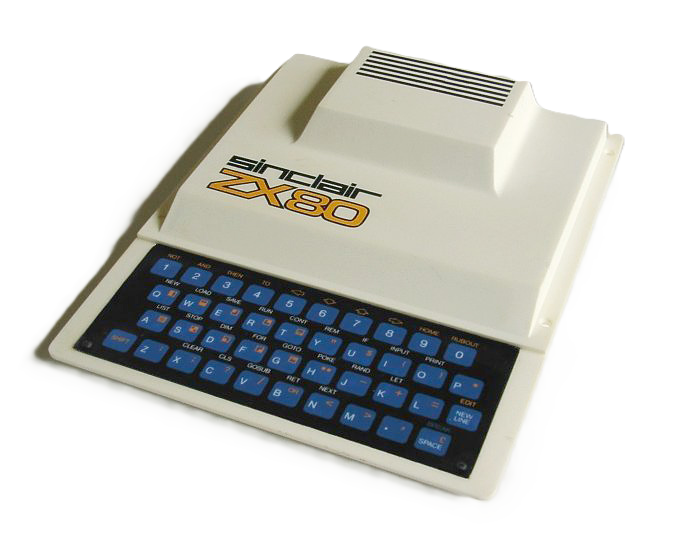
The machine was housed in a compact white plastic case with a distinctive flat membrane keyboard. By modern standards the specifications were tiny, but in 1980 they were enough to introduce thousands of people to programming and home computing.
Saving Up
The more I read about the ZX80, the more I wanted one.
At £99.95 it was still a significant amount of money, but it was within reach with just a couple of months of saving. After a month or two of putting money aside, I finally had enough.
I filled in the order form from the magazine, wrote out a cheque and posted it off.
Then came the waiting.
And waiting.
And more waiting.
Demand for the ZX80 was far greater than Sinclair had expected, and delivery times stretched into weeks. Every day I found myself wondering whether it would arrive. It felt like a lifetime.
Finally Arrives
One day the parcel finally appeared.
I quickly opened the box and found the computer well protected inside. Along with the ZX80 itself came a hefty manual, a power supply and the cables needed to connect it to a television and cassette recorder.
On the back of the machine were sockets for the TV connection, cassette storage and an expansion port. That expansion port promised all kinds of future possibilities, although I never actually used it.
After connecting everything up and switching it on, I was greeted by a completely blank screen apart from the cursor.
It was both exciting and slightly terrifying.
There were no menus, no icons and no colourful graphics welcoming me to the world of computing. The ZX80 simply sat there waiting for instructions.
Learning BASIC
Fortunately, the manual that came with the computer was excellent.
It guided complete beginners through the BASIC programming language step by step, and before long I was typing in simple programs and experimenting with my own ideas.
For someone who had never owned a computer before, it felt like discovering an entirely new world.
The ZX80 did have its limitations, however.
To keep the machine affordable, Sinclair had designed it so that it couldn't update the display and run a program at full speed at the same time. Whenever a program was executing, the screen would often go blank. Even pressing a key caused the display to flicker.
At first this seemed strange, but it quickly became something you simply accepted as part of using the machine.
Hours of Typing
As magazines began publishing ZX80 programs, I spent many evenings typing them in line by line.
This is where I discovered just how bad my typing skills really were.
A single misplaced character could stop an entire program from working. Many hours were spent carefully checking line after line of code, hunting for typing mistakes, missing brackets or spelling errors.
Looking back, it probably sounds incredibly boring, but at the time it was fascinating.
There was something very satisfying about typing hundreds of lines of code from a magazine and eventually seeing the finished program come to life on the screen. Even when it failed, the challenge of finding the mistake taught me more about programming and problem solving.
Looking Back
The Sinclair ZX80 wasn't a powerful machine, even by the standards of its own time. It had very little memory, a tiny keyboard and a display that disappeared whenever a program ran.
Yet none of that mattered.
For me, it was my first real computer and my introduction to programming. It transformed computing from something mysterious that belonged to large organisations into something I could have at home on my own television.
More importantly, it showed me that computers weren't just machines to use—they were machines you could understand, control and create things with.
That simple white box marked the beginning of a lifelong interest in computers.