
1975-1977 New House, New “Life” and Nothing Much Else
After my parents split up, we moved into a house that never really felt like home. I spent more time out with friends than indoors, with only a lonely record player and old albums by The Platters and Neil Sedaka filling the silence of an otherwise empty front room.

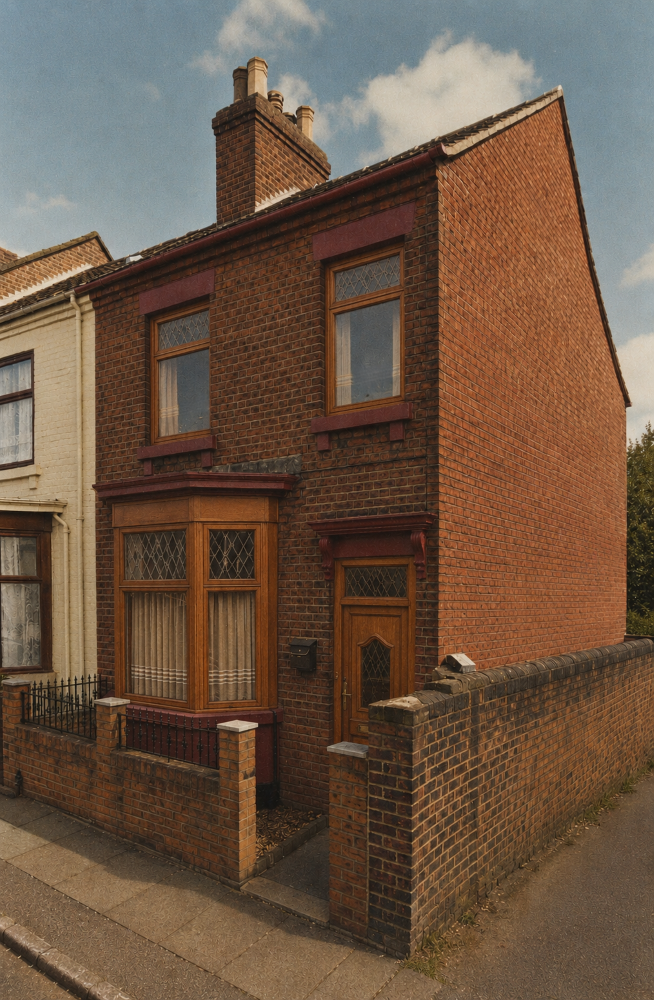
My mother and father had split up when I was around eleven years old, and not long after that my mother married an ex-friend of my father’s. We moved into his house, and although it was supposed to be the start of a new life, it never really felt that way to me. By then I was around fifteen, in my final year at school, and most of my time was spent out with friends rather than at home. Home was somewhere I slept, ate, and eventually drifted away from, rather than somewhere I truly settled into.
I barely watched television during that period. I know the set in the house was colour, which still felt fairly modern to me at the time, but I honestly cannot remember what make it was or even what programmes were usually on. Television had stopped being the centre of my world by then. In earlier years it had been something almost magical — a family event, something that brought everyone into the same room — but by my mid-teens life outside the house seemed far more important. Friends, wandering around the streets, hanging around wherever everyone else gathered, that was what filled my days.
The house itself always felt strangely empty to me. The front room especially sticks in my memory because it was almost completely bare apart from a record player. No comfortable chairs, no warm family atmosphere, just this odd empty space with music in it. I cannot even remember who the record player belonged to, but I spent hours in that room listening to whatever albums happened to be there. Music became the thing that filled the silence.
Two names stand out clearly in my memory: The Platters and Neil Sedaka. I can still picture those records spinning while I sat in that otherwise empty room. There was something strangely comforting about it, even if the music itself belonged more to an earlier generation than my own. The songs seemed to echo around the room because there was so little else in it. I do not even remember if the record player had a radio built into it — only the records themselves seem important in my memory.
Not long after leaving school at sixteen, I started my first job. My take-home pay was about £17 a week, which at the time felt like real money even though it disappeared quickly enough. Around then, my mother finally came to her senses and left him. We moved again, this time to a huge flat above a pie shop. It sounds odd looking back on it now, but that flat felt more alive than the house ever did. Maybe it was the noise from the street below, the smell of baking drifting upwards, or simply the feeling that we had escaped a place where neither of us had really been happy.
By then I was stepping into adult life myself — working, earning money, and slowly leaving school and childhood behind. Looking back, that period feels less defined by television or technology and more by absence: empty rooms, drifting relationships, music playing in the background, and the feeling of wanting to be almost anywhere other than home.