
My Second Camera
In the late 1970s I bought my second camera, a Kodak 110 model with a folding handle and dual-lens system. It captured family events, holidays and special occasions, although many of the prints and negatives have since been lost to time.

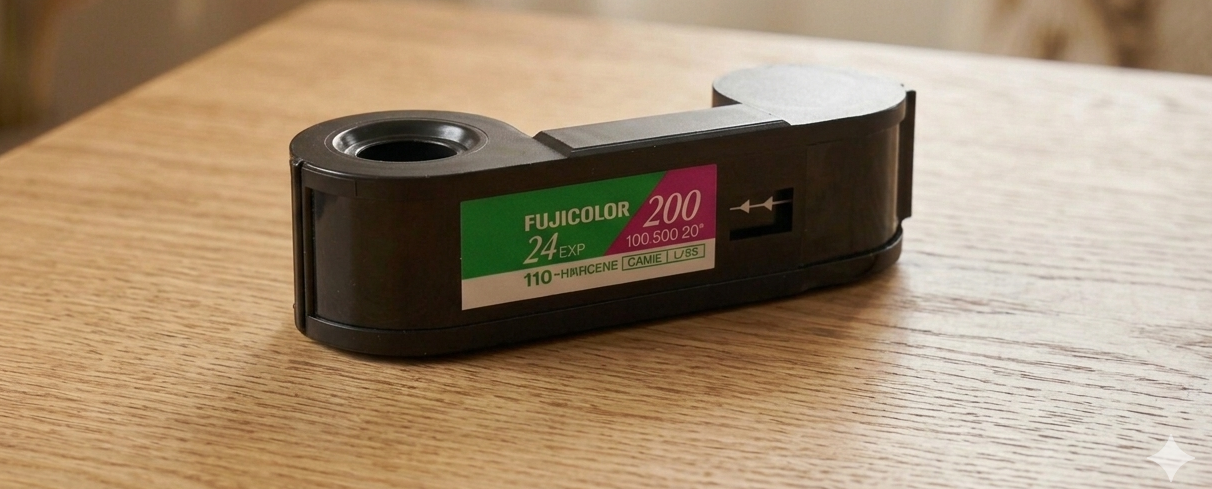
I still have some 110 negatives that were taken around 1977, so I know I had a 110 camera by then, even if I can’t remember the exact model. What I do remember is the shape of it. It had a cover that flipped round and became a steadying handle, which was a clever little design and made the camera feel more solid when taking a photo.
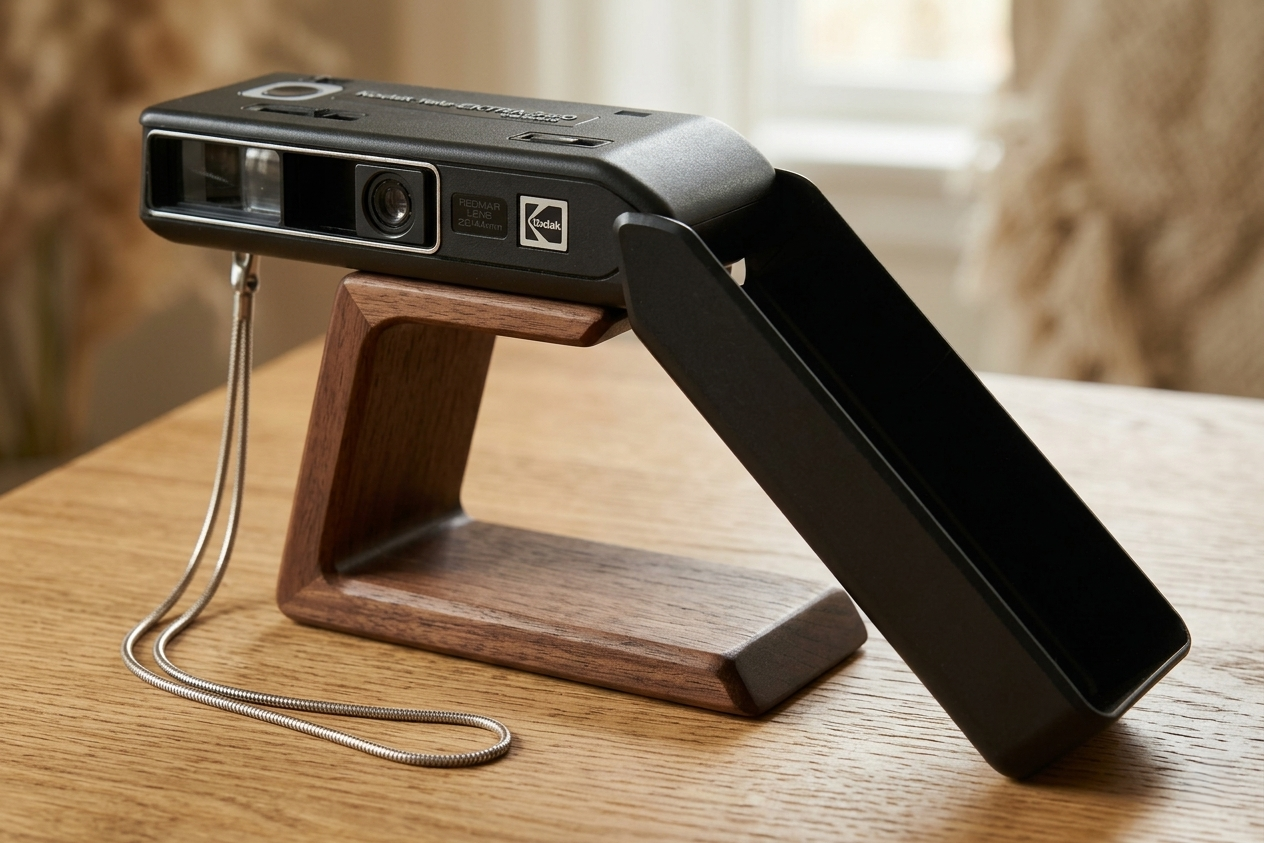
I am fairly sure it was a Kodak. It may have been something like the Kodak Tele-Ektra 350, or another camera from the Kodak Tele-Ektra range. The Kodak Tele-Ektra cameras used 110 film and some models had a dual lens system, with a standard and telephoto option. The Tele-Ektra 1, for example, had a 22mm and 44mm dual lens arrangement, and its cover folded out to become a handle.
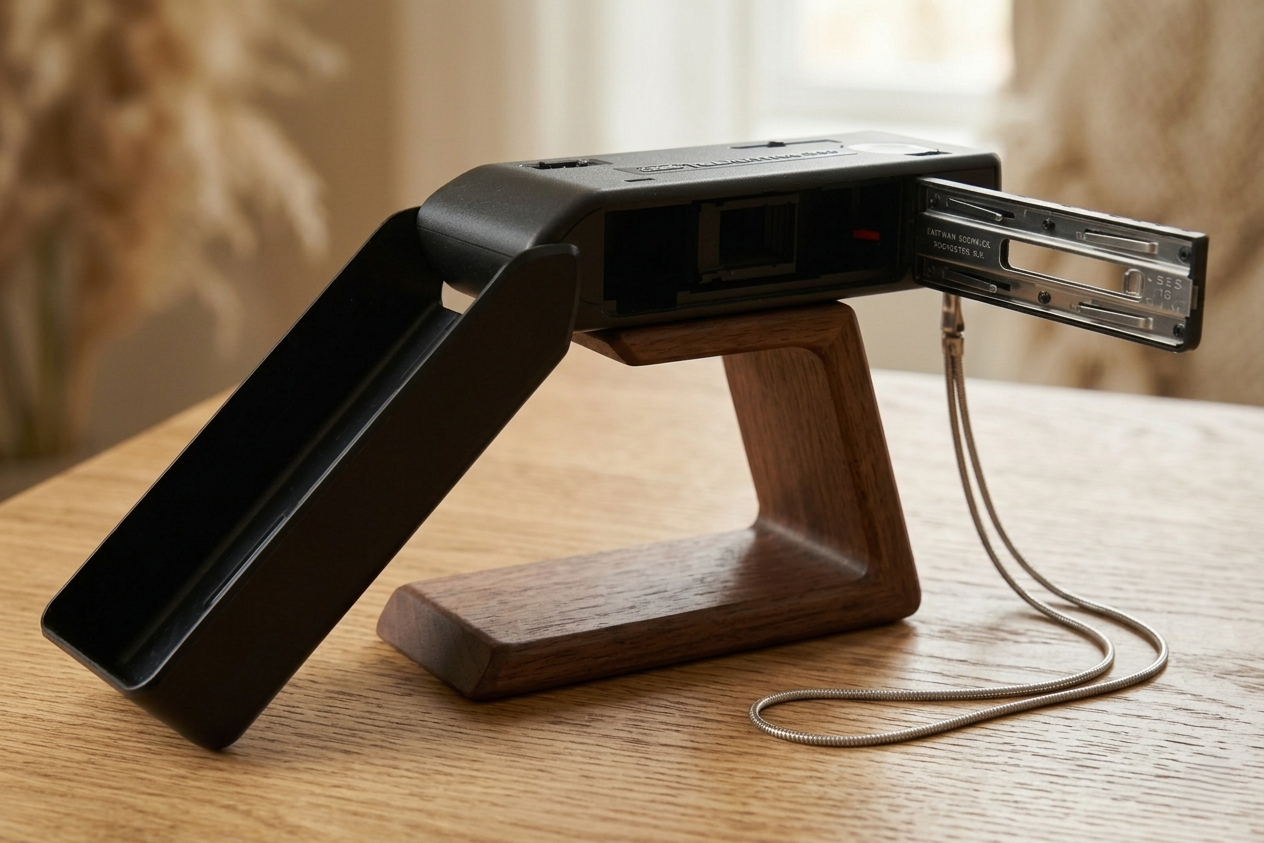
I don’t remember where I bought it, but it was probably from Dixons or Argos in town. I bought it with very little knowledge of cameras. I just wanted something I could take on holidays, family visits, weddings and birthdays. It was simple, small, and easy to carry, which was probably all I cared about at the time.
Some of the photo sets I know were taken with this camera include:
Sister’s house, 1979
Grandparents’ house, 1980
Sister’s wedding, 1980
Grandad’s 70th birthday
Loch Lomond holiday, 1980
Isle of Wight holiday, 1981
Back in the early 1980s, I didn’t look after my negatives like I do now. A lot of my 110 negatives and prints have disappeared over the years. The prints I still have were often cut to fit into photo albums and glued or pressed into place.
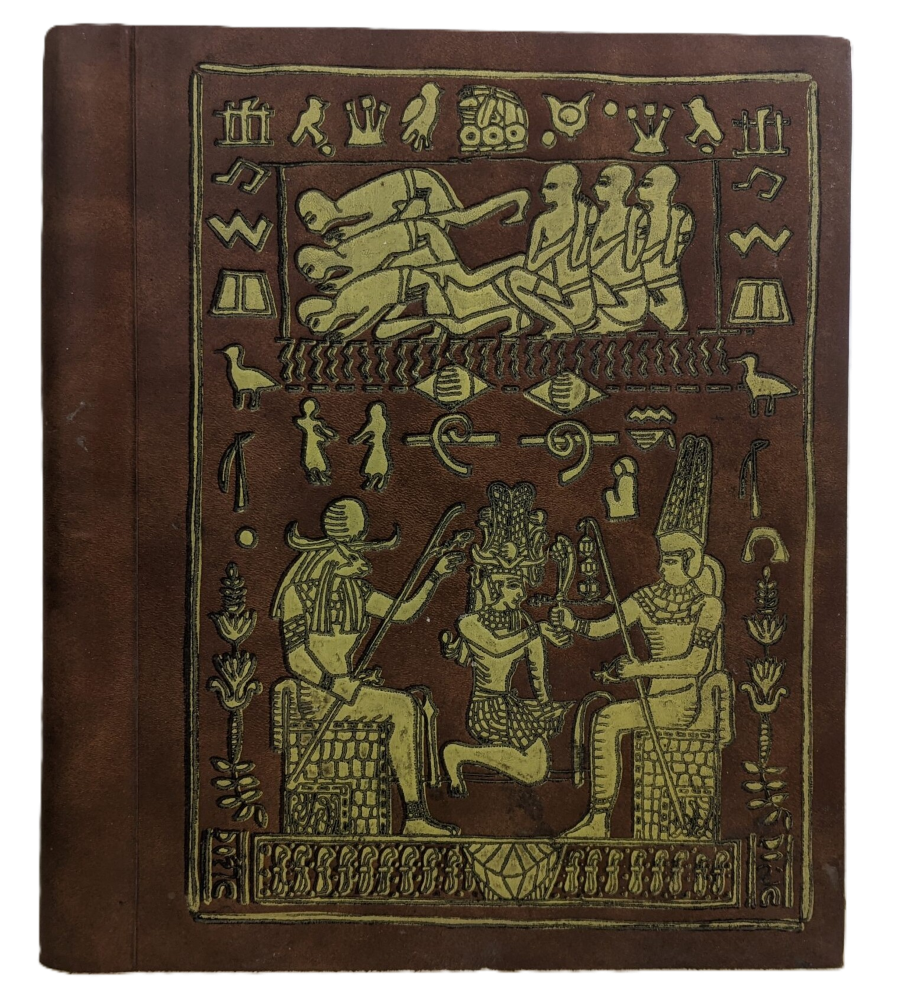
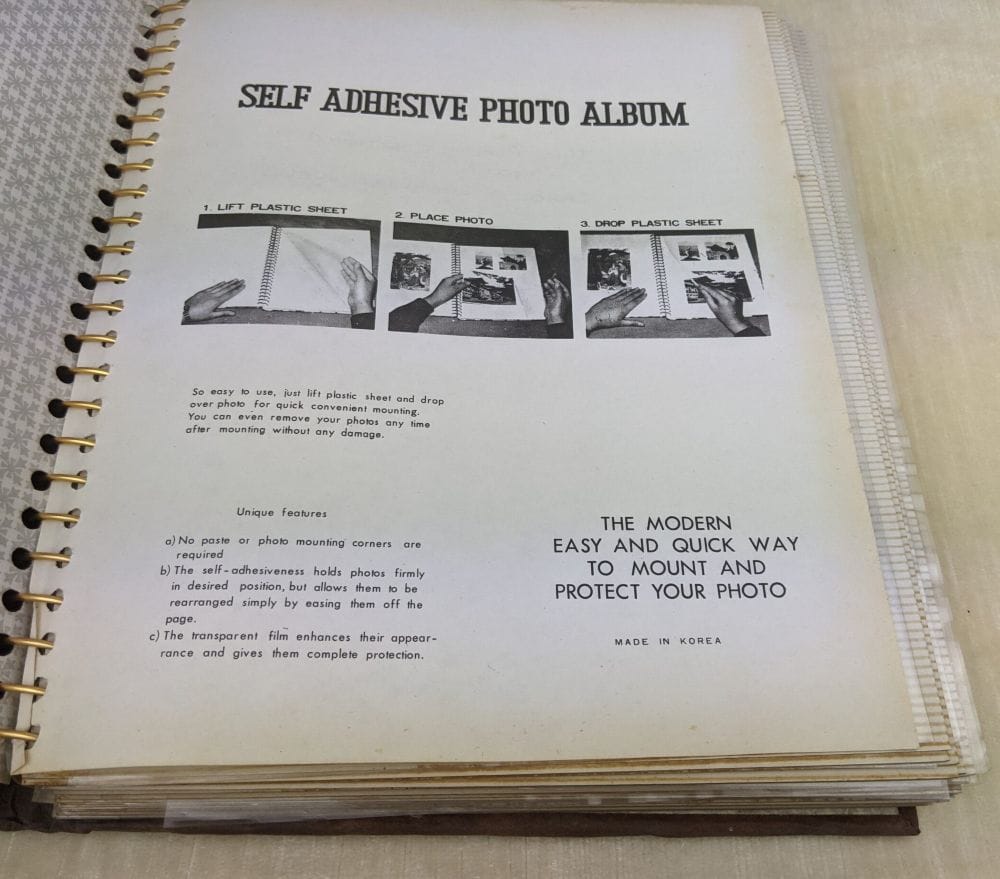
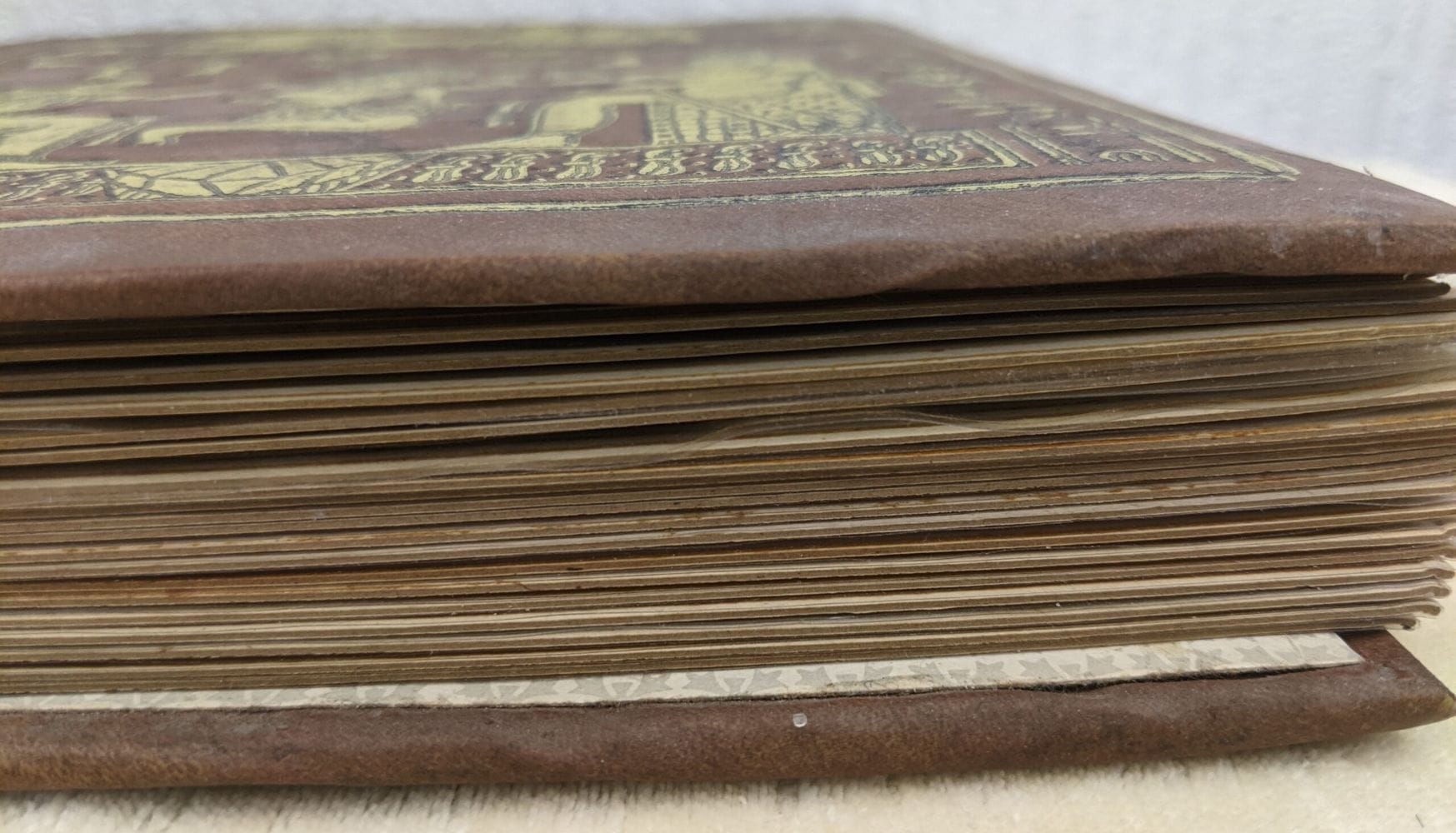
These were the old self-adhesive albums where you lifted the clear plastic sheet, placed the photo underneath, then smoothed the sheet back down. They worked well enough at the time, but after thirty years or more the photos were almost impossible to remove without damage. In many cases the glue had started to deteriorate, and a form of rot had set into both the adhesive and the paper backing. The pages had yellowed, the adhesive had become brittle and patchy, and some photos had effectively become bonded to the album. Trying to remove them often resulted in torn paper backs, damaged corners, or parts of the image peeling away with the page. At the time these albums seemed like the perfect way to store photographs, but decades later they proved to be one of the worst things for preserving them.
I don’t know what happened to the camera itself. Like many things from that time, it simply vanished somewhere along the way. But I still have some of the prints and negatives it produced, and those small 110 photos are now the only real proof of that second camera and the places it came with me.
Although I can't remember much about the actual experience of using the camera, the surviving photographs show just how often it came with me. Family visits, weddings, birthdays and holidays all passed in front of its lens. In many ways, the camera itself has faded from memory, but the photographs it produced have become a record of that period of my life.
What I do remember is liking the design of the camera. When closed, the folding cover protected the lens and made the camera compact enough to slip into a jacket pocket. When opened, the cover swung round to become a handle, giving you something substantial to hold on to when taking photographs. At the time I thought it was a clever design and, if I'm honest, it looked quite futuristic compared to other cameras I had seen.
The camera was battery-powered, using either AA or AAA batteries—I can't remember which—and I always seemed to carry spare batteries with me just in case. Whether they were actually needed very often I don't know, but it felt like an important thing to do when you were away from home on holiday.
The compact size was one of the reasons I liked the camera so much. The 110 film cartridge simply dropped into place, making loading film quick and easy. Compared to my brother's 35mm camera, which seemed to involve threading film leaders and carefully winding everything into position, the 110 system looked wonderfully simple. I could be ready to take photographs in seconds.
Most of my photographs were fairly typical holiday and family snapshots. I remember taking both landscape and portrait pictures, capturing places we visited, family gatherings and special occasions. Looking back through the surviving prints today, I can see that convenience was the camera's greatest strength.
Of course, the simplicity came with compromises. My brother's photographs generally seemed sharper and clearer than mine. Whether that was because he was the better photographer or because his 35mm camera had a significant advantage in image quality, I couldn't say. The 110 negative was tiny compared to a 35mm frame, and some of the prints produced from it could be disappointing. Every now and then a batch of photos would come back looking washed out or lacking detail, something that was often blamed on the processing rather than the camera itself.
Even so, none of that mattered very much at the time. The camera was small, easy to carry, simple to use and always ready to capture a moment. For several years it accompanied me on family events, holidays and celebrations, and although the camera itself has long since disappeared, many of those memories survive in the photographs it left behind.