
Binatone TV Master MK IV
In 1977 I bought a Binatone TV Master MK IV, my first games console. Connected to a 12" black and white portable TV, its simple Pong-style games felt futuristic at the time and marked my first step into home gaming.

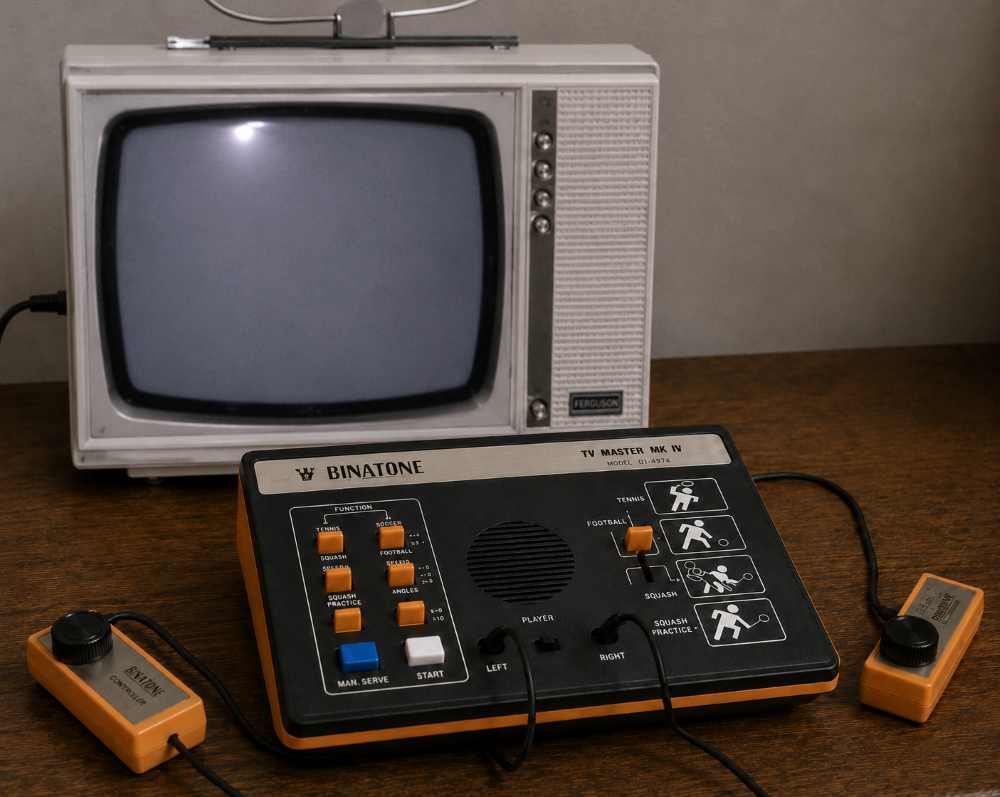
Around 1977 I bought a Binatone TV Master MK IV from a shop in town. I think it cost around £20, which at the time felt like an enormous amount of money — probably most of my weekly wage gone in one hit. Looking back now it seems cheap compared to modern consoles, but in the late 1970s £20 was serious money for something that was really little more than a few white blocks bouncing around a screen.
It wasn’t my first piece of tech, but it was my first computer game system.
I already had a little 12-inch black and white portable television that was being paid for weekly through my mother’s mail order catalogue. In those days a lot of household items were bought that way — small weekly payments until eventually the thing was yours. That television became my gaming screen.
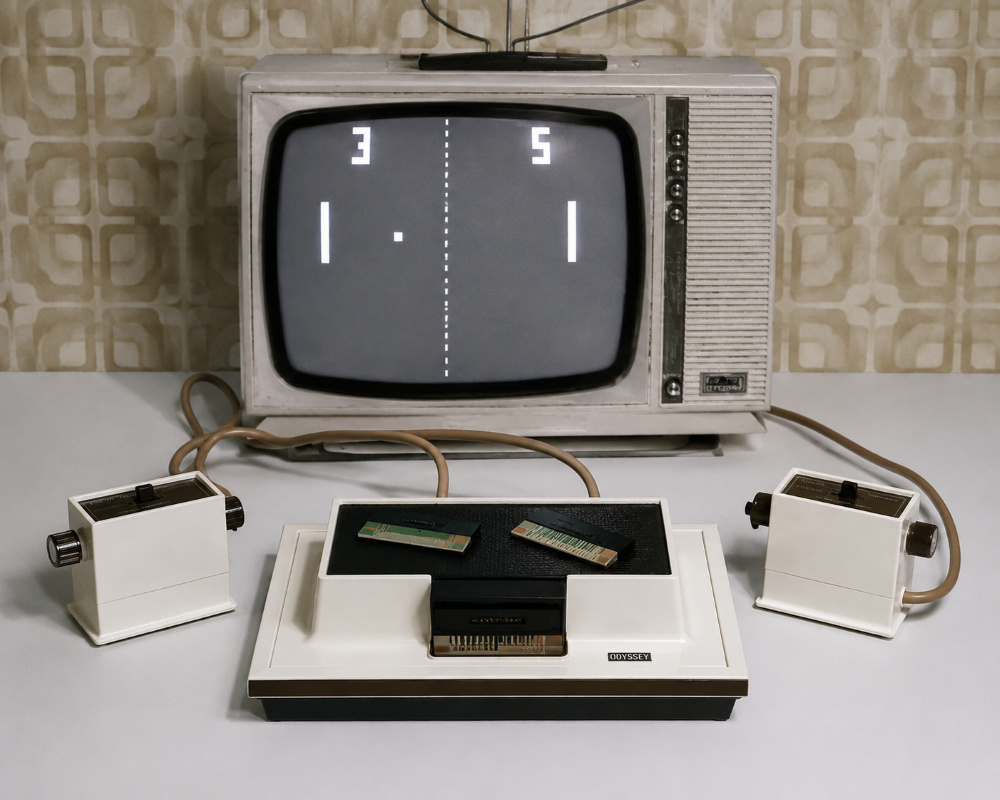
Years earlier I had seen the Magnavox Odyssey featured on Tomorrow's World and the whole idea of controlling something on a television screen had seemed almost magical. The Binatone wasn’t as advanced or as futuristic-looking as the Odyssey, but to me it still felt amazing. You simply plugged it into the television aerial socket, tuned the TV in, and suddenly your television became interactive.
That simple idea alone felt revolutionary.
The console itself was one of the many British “Pong-style” machines released during the mid-to-late 1970s. The Binatone TV Master range was extremely popular in the UK because it was far cheaper and easier to buy than American systems like the Atari VCS that would arrive later. The MK IV used the famous General Instruments AY-3-8500 “Pong-on-a-chip” processor, a single chip that handled all the graphics and gameplay.
The games were incredibly simple even by the standards of the time:
- Tennis — two bats, one on each side, and a bouncing square ball with a line down the middle acting as the net.
- Football — similar to Tennis but with extra bats acting as goalkeepers.
- Squash — both players on the same side hitting against a wall.
- Squash Practice — a one-player version where you played alone against the machine.
Some later Binatone systems added light gun games, but the MK IV I owned was just the basic four-game version.
The graphics were little more than white rectangles and dots on a black screen, especially on my tiny black and white portable TV, but that hardly mattered. At the time it still felt futuristic. The machine even kept score on screen, something that seemed incredibly advanced to me then.
The controllers were attached by wires and each had a rotary knob you twisted left and right to move the bats up and down the screen. There were switches on the console to alter things like ball speed, bat size, angle, and serve options, which made the games feel more sophisticated than they really were.
For a while it was great fun, especially when another person was playing. But the novelty wore off surprisingly quickly. There were only so many times you could bounce a square “ball” between two white lines before it started to feel repetitive. Playing alone was even less exciting, and before long I found myself getting bored with it.
That was probably the biggest limitation of those early consoles. The technology itself was astonishing for the time, but the gameplay was very shallow. Unlike later cartridge-based systems, there were no new games to buy and no real variety beyond slightly different versions of the same idea.
Still, despite how basic it was, the Binatone TV Master MK IV opened a door. It was the first time I owned something that turned the television from something you simply watched into something you could interact with. That alone made it memorable.
I don’t remember exactly what happened to it in the end. I probably sold it or gave it away once the novelty wore off. At the time it just became another outdated gadget.
Of course, if I had kept it boxed and complete, it would probably be sitting on a retro gaming shelf today as a small piece of gaming history.