
Amstrad CPC464 and CPC6128
After being made redundant in 1984, I treated myself to an Amstrad CPC464 complete with colour monitor. Later upgrading to the CPC6128, the computer became more than a games machine, helping me write job applications and earn a City & Guilds qualification.

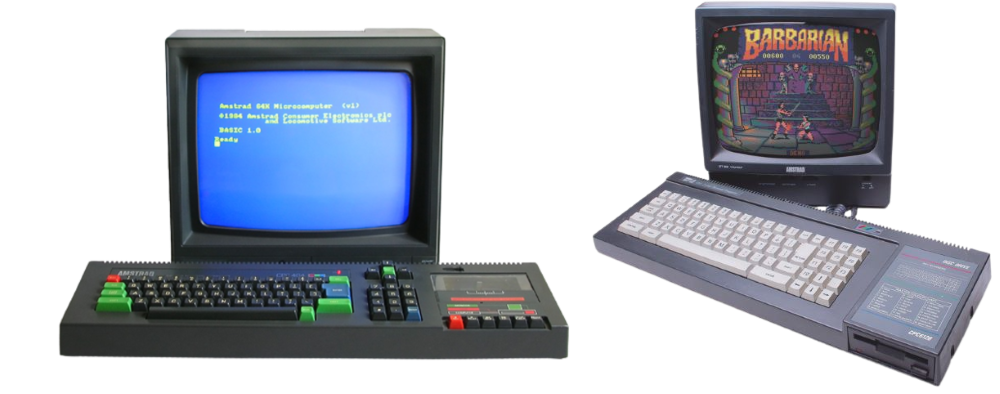
By 1984 I had already owned several computers, including the Sinclair ZX80, ZX81 and VIC-20. While many people were buying the Sinclair Spectrum, I never really wanted one. The rubber keyboard didn't appeal to me and cassette loading seemed unreliable. I wanted something that felt more like a complete computer rather than a computer assembled from separate pieces.
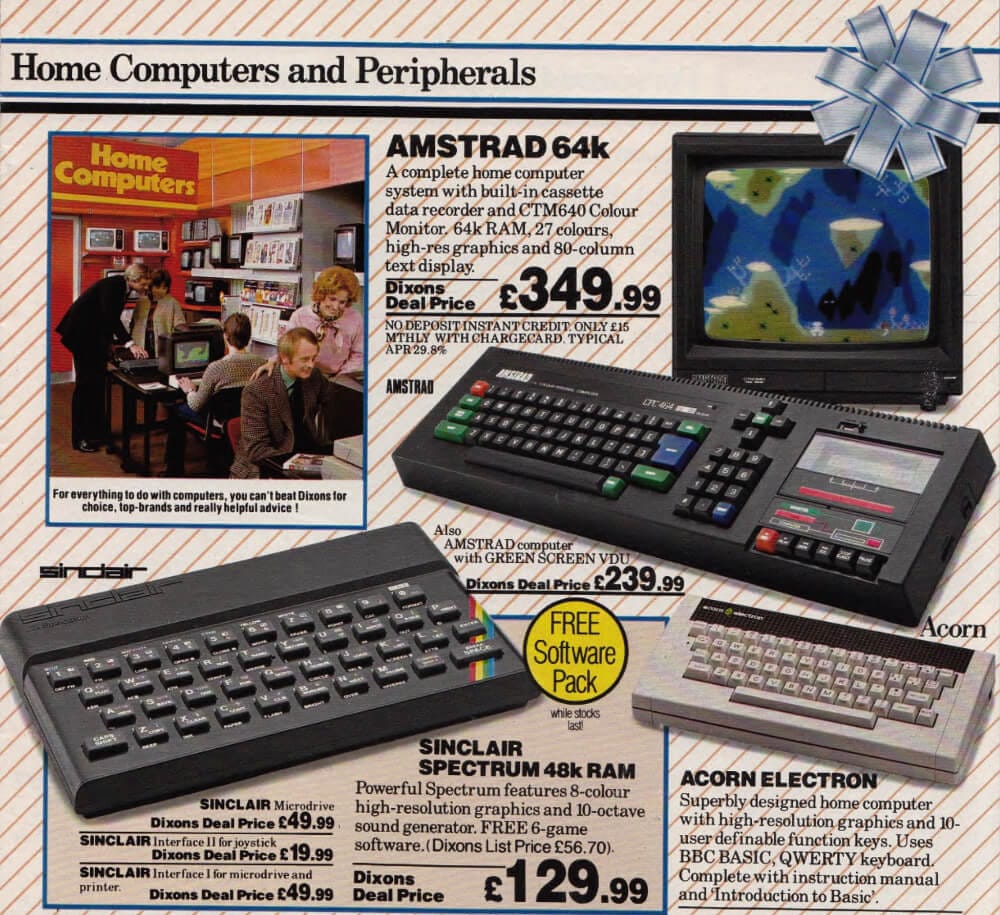
Then I saw the Amstrad CPC464.
At the time I had recently been made redundant and received around £1,700 in redundancy pay. Being sensible, I invested £1,000 into a high-interest savings account, but I also decided to treat myself. One of those treats was an Amstrad CPC464, complete with its dedicated monitor.
I can't remember exactly what I paid, but judging by the advertisements of the time it was probably around £350 for the computer and colour monitor package. It wasn't cheap, but compared with many rival systems it represented excellent value.
The Computer for the Rest of Us
When the CPC464 launched in April 1984 it immediately stood out from the competition. Until then, most home computers required a separate cassette recorder and often took over the family television.
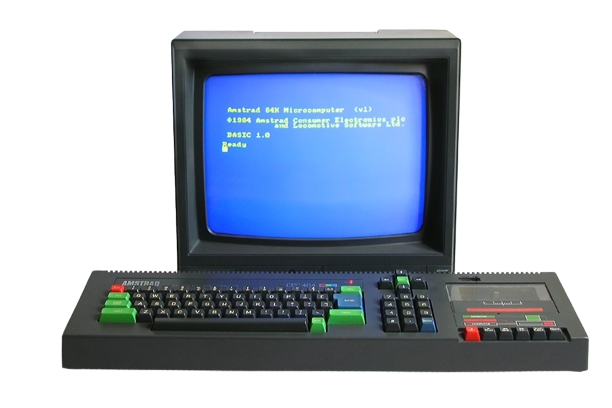
Alan Sugar's Amstrad had a different idea.
The CPC464 came as a complete package. The keyboard, cassette deck and computer were built into a single unit, and it could be purchased with either a green-screen or colour monitor. Everything needed to get started was included in the box.
This was heavily promoted in Amstrad's advertising. Rather than targeting enthusiasts, Amstrad aimed at ordinary families. The message was simple: buy this box and start computing immediately.
For me, the dedicated monitor was one of the biggest selling points. It meant I wasn't monopolising the family television. Other people could continue watching their favourite programmes while I disappeared into my own little world of computing.
A Serious Machine
Underneath its practical design, the CPC464 was a very capable 8-bit computer.
Powered by a 4 MHz Zilog Z80A processor and equipped with 64 KB of RAM, it was competitive with the Spectrum and Commodore 64. The machine offered colourful graphics, excellent sound and a full-size typewriter-style keyboard that felt far more professional than the rubber keys found on some competitors.
One feature I particularly appreciated was the built-in cassette recorder. There were no tangled cables and no need to find a compatible tape deck. You simply inserted a cassette and loaded your software.
The CPC464 quickly built up a huge software library, covering everything from arcade games and adventures to educational and business applications. Although I spent many hours using the machine, the specific games I played have long since faded from memory.
The Amstrad Printer
At some point I also purchased an Amstrad dot-matrix printer along with boxes of continuous listing paper.
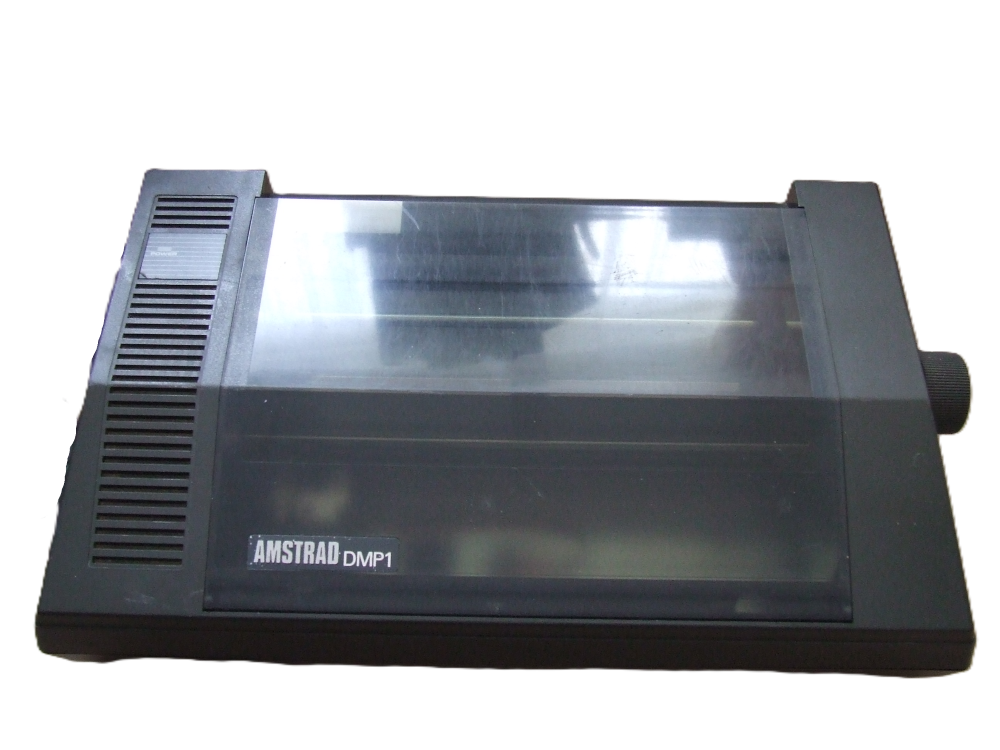
Anyone who owned one of these printers will remember the noise. When printing a document it sounded as though a miniature jackhammer had been installed in the room. Nevertheless, it transformed the computer from a hobby machine into something genuinely useful.
Seeing pages emerge from the printer felt remarkably professional at the time.
Upgrading to the CPC6128
In 1985 Amstrad released the CPC6128, and naturally I wanted one.
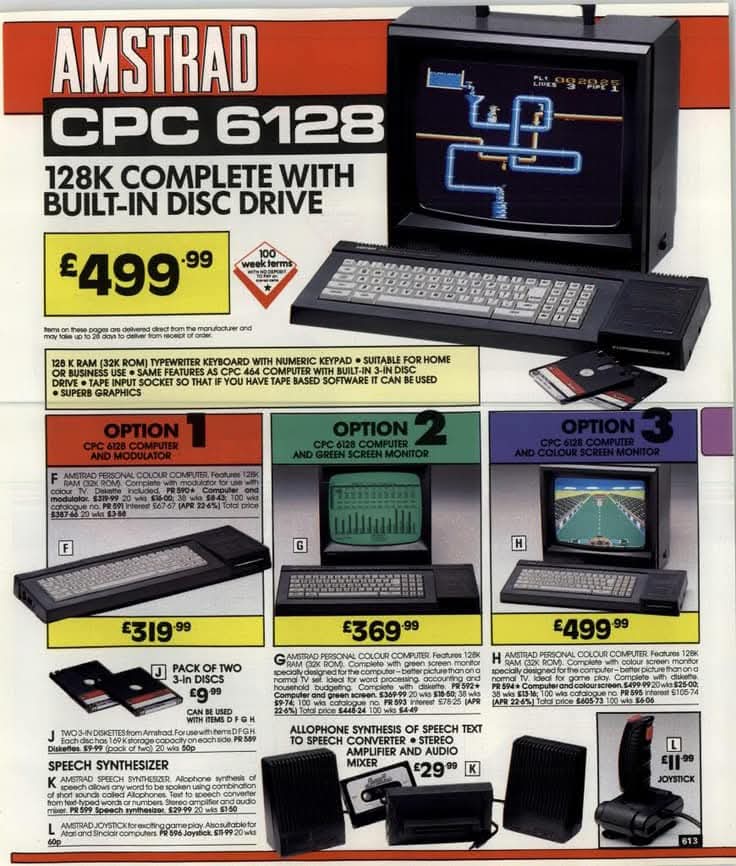
The new machine looked similar to the CPC464 but offered several significant improvements. Most importantly, it included 128 KB of RAM and a built-in 3-inch floppy disk drive.
The floppy drive was a revelation. No more waiting for cassette tapes to load. Programs loaded much faster and storing files became far more convenient.
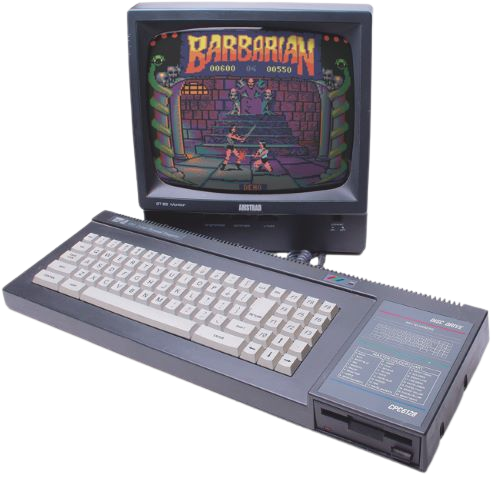
I honestly cannot remember what happened to my CPC464. It may have been sold or traded in towards the cost of the new machine. Whatever happened, the CPC6128 became my main computer.
More Than a Games Machine
Unlike many of my earlier computers, the CPC6128 became a practical tool.
During a period of unemployment I used it to type letters for job applications and interviews. Word processors were becoming increasingly popular and the CPC6128 was more than capable of producing professional-looking documents.
Family and friends occasionally asked if they could use the computer for letters and documents too. Looking back, that seems rather amusing now, but at the time not everyone had access to a computer or printer.
For a while my CPC6128 became the unofficial word-processing centre for friends and family.
Selling the Computer
Eventually I sold both the CPC6128 and the printer to a family friend.
I don't remember exactly why. Most likely I needed the money. Being unemployed meant luxuries sometimes had to be sacrificed.
Ironically, not long afterwards I enrolled on a training course and needed a computer to complete my coursework. I ended up asking to borrow the CPC6128 back so that I could type and print assignments for my City & Guilds qualification.
Thankfully my former computer owner agreed.
The coursework was completed, the assignments were printed, and I eventually earned the qualification. That certificate helped me secure another job, making the Amstrad indirectly responsible for getting my career back on track.
The End of an Era
The CPC464 and CPC6128 represent some of my fondest memories of 1980s computing.
They were reliable, well-designed machines that offered an excellent balance between gaming and productivity. Unlike some of my earlier computers, they felt mature and practical.
The CPC6128 in particular proved that a home computer could be more than just a toy. It could be used for real work, real documents and real opportunities.
After selling the CPC6128 I gradually lost interest in computers and games consoles for several years. Technology moved on, life moved on, and my attention shifted elsewhere.
It would take another machine to reignite that enthusiasm.
That machine was the Amiga A500.
Technical Specifications
Amstrad CPC464 (1984)
| Specification | Details |
|---|---|
| CPU | Zilog Z80A @ 4 MHz |
| RAM | 64 KB |
| ROM | 32 KB |
| Storage | Built-in cassette deck |
| Graphics | 160×200 (16 colours), 320×200 (4 colours), 640×200 (2 colours) |
| Palette | 27 colours |
| Sound | General Instrument AY-3-8912, 3 channels |
| Keyboard | Full-size QWERTY |
| Expansion | Printer, joystick, floppy drive and expansion ports |
| Monitor | Green-screen or colour monitor options |
Amstrad CPC6128 (1985)
| Specification | Details |
|---|---|
| CPU | Zilog Z80A @ 4 MHz |
| RAM | 128 KB |
| ROM | 48 KB |
| Storage | Built-in 3-inch floppy disk drive |
| Graphics | Same as CPC464 |
| Palette | 27 colours |
| Sound | AY-3-8912, 3 channels |
| Operating System | CP/M Plus and AMSDOS |
| Keyboard | Full-size QWERTY |
| Monitor | Compatible with Amstrad colour and green-screen monitors |
Why the CPC Range Was Successful
Amstrad's advertisements often focused on three simple advantages:
- Everything included in one box.
- A proper keyboard instead of rubber keys.
- A dedicated monitor that didn't take over the family television.
These features helped make the CPC464 one of Britain's best-selling home computers and established Amstrad as a major player in the home computing boom of the mid-1980s.